The ads weren’t sending the buyers. Search was.
Rising Stars Muay Thai · Sacramento fight promotion · 2026
The situation
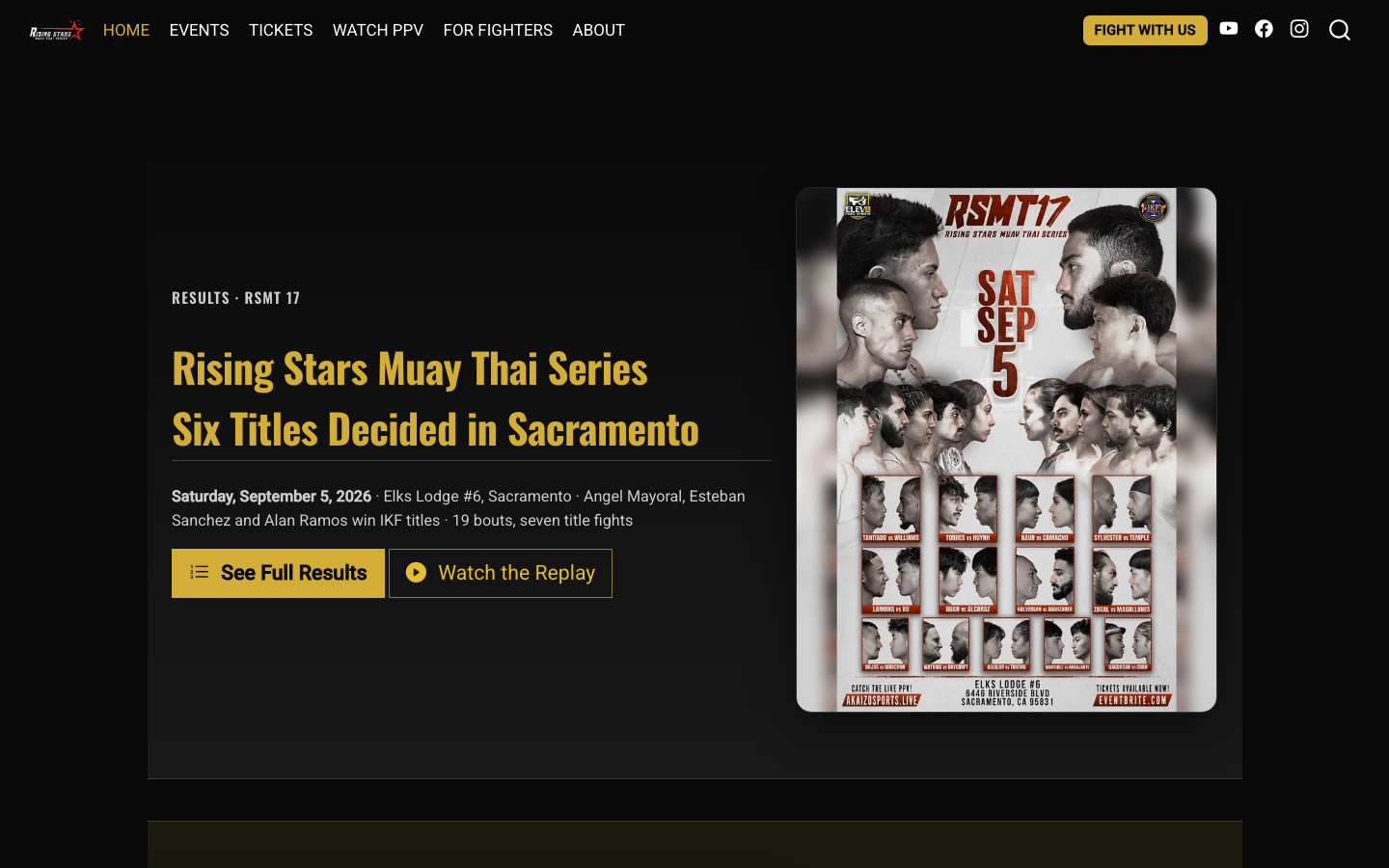
Rising Stars Muay Thai puts on live fight events in Sacramento and streams them pay-per-view. Tickets sell through Eventbrite. Streams sell through a PPV partner. The promotion ran on social media and word of mouth.
There was no real website. There was no analytics. Nobody had written down what a conversion was. The owner was paying for promotion with no way to see what came back.
What I built
A website that is the promotion’s home. Event pages, fighter pages, a watch page. One job: get a visitor to the ticket or stream link in as few taps as possible. Built to be measured from day one.
Measurement, from zero. Google Tag Manager with a full event taxonomy. GA4 wired to the customer journey. Every raw event exported to BigQuery, so any number can be recomputed from scratch instead of trusted off a dashboard. A conversion was defined precisely: a click through to the ticketing or streaming partner. That is a purchase intent signal, not a completed sale, and every figure on this page is read that way.
A pipeline the owner never touches. Raw events flow from GA4 to BigQuery to an analysis layer, into a dashboard the owner can read without help, and into a written read-out after each show.
A model on top. Logistic regression on session data, to find what actually predicts a checkout click: device, channel, timing, engagement. So the recommendations rest on evidence, not on hunches. This phase ran as my M.S. capstone. A team of six, and I ran it: the tracking, the pipeline, the model, the dashboard, and the client relationship, across three semesters.
What the data showed
The site has reached more than 7,000 visitors across six event cycles since it went live in January 2026. From the capstone analysis of the first four:
- Organic search converted visitors at more than four times the rate of paid social. Paid social was the one channel the promotion was paying for.
- Buyers decide fast. Nine in ten converting visitors clicked through to checkout on the day they first arrived. There is no nurture window to optimize. There is a home page to get right.
- Nearly two-thirds of checkout clicks started on the home page. That changed what the home page is for.
After the capstone closed, the September 2026 event ran the promotion’s first real paid campaign, measured the same way. Ads bought most of the visits. Organic search and referral links produced most of the checkout clicks. Same lesson, one more cycle.
One more line, and it matters more each month. When someone asks an AI search tool about the event, the answer points to the promotion’s own page, not to a listing someone else controls. Those visitors are few, but they arrive decided. That only works because the site exists and says the right things.
What the owner can do now
See, after any event, which channel sent buyers and which sent traffic, and plan the next one on that. Ask for a change to the site by email and approve it from a preview link. Own the site, the data, and the dashboard outright.